Wildfire Smoke in Oregon: How to Improve the Air Inside Your Home
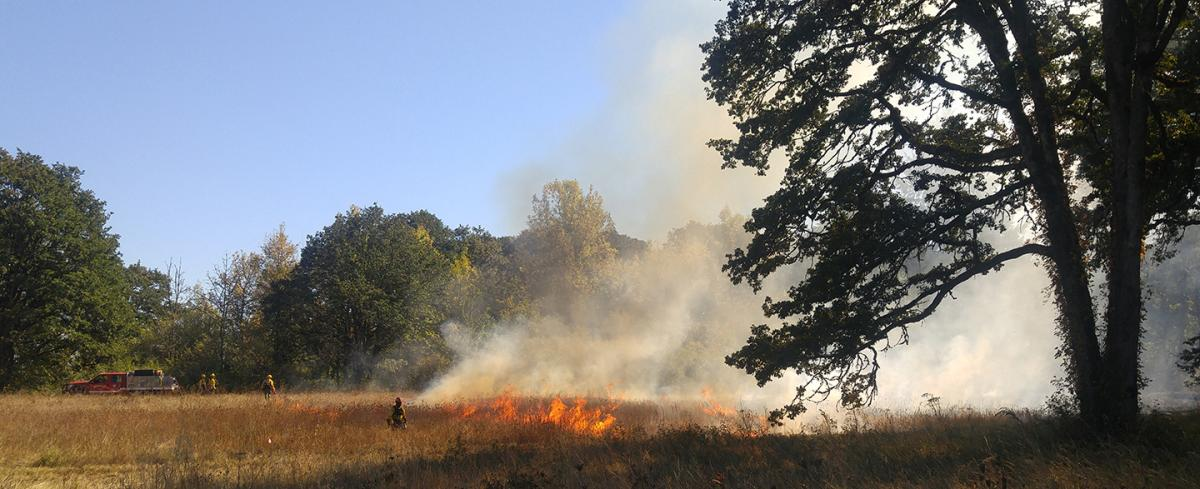
Wildfire smoke can travel hundreds of miles, and when smoke settles into our communities, the air inside our homes can be affected too.
If you're seeing smoky skies or poor air-quality readings, there are several simple steps you can take to reduce your exposure and improve indoor air quality.
Keep smoky outdoor air outside
When outdoor air quality is poor, the Oregon Health Authority recommends limiting your exposure to wildfire smoke.
One of the simplest things you can do is keep your home's windows and doors closed.
You should also reduce other sources of indoor air pollution, including:
Tobacco smoke
Wood-burning stoves and fireplaces
Burning candles
Other activities that create smoke or airborne particles
It's also a good idea to avoid vacuuming during periods of heavy smoke because vacuuming can stir up dust and particles.
Consider a HEPA air purifier
A portable air purifier equipped with a high-efficiency filter can help clean the air in an occupied room.
If you're shopping for an air purifier, look for a unit appropriate for the size of the room where you'll use it and follow the manufacturer's recommendations for filter replacement and operation.
Energy Trust instant rebates may help
If you're an eligible utility customer, you may be able to save money on a qualifying air purifier through Energy Trust's online marketplace.
Energy Trust currently offers instant rebates on qualifying air purifiers.
View eligible air purifiers and current rebates
Eligibility depends on your utility and fuel type. Current eligible customers include certain Oregon residential electric customers of Portland General Electric and Pacific Power, certain Oregon residential natural gas customers, and certain Washington residential natural gas customers of NW Natural.
Because incentive programs can change, check the Energy Trust marketplace for current eligibility and rebate information before purchasing.
No air purifier? Consider a DIY option.
If a HEPA or electronic air cleaner isn't available, the Oregon Health Authority notes that you can consider making a DIY air cleaner using a box fan and a furnace filter.
For the DIY filter to be effective, the filter should completely cover the fan's surface. Oregon Health Authority recommends a HEPA-rated or MERV-13-or-higher filter.
Filters that are approximately 3–5 inches thick may last longer than thinner filters.
Always follow the manufacturer's safety instructions for your fan and filter, and never leave a DIY fan/filter setup unattended if there are safety concerns.
Don't forget your car
Wildfire smoke can also enter your vehicle.
When driving through smoky conditions:
Keep the windows closed.
Set your climate control to recirculate.
Avoid bringing smoky outside air into the cabin when possible.
Take extra precautions when needed
Some people are more vulnerable to the effects of wildfire smoke than others. If you or someone in your household has a condition that puts them at higher risk from smoke exposure, consider following guidance from public-health officials and taking additional precautions.
When smoke is particularly heavy, leaving the affected area may be the best option for some people.
We're all dealing with this together
Wildfire smoke is frustrating—and sometimes overwhelming—but there are practical things we can do to reduce our exposure.
Keep your home closed up when outdoor air is unhealthy, use high-efficiency air cleaning when available, and check local air-quality information before spending extended time outdoors.
And if you're shopping for an air purifier, don't forget to check whether you're eligible for an Energy Trust instant rebate.
Check current air-purifier rebates →
Stay safe, take care of yourselves, and look out for your neighbors.